


Every South Asian wedding tells its story in color. The red of a bridal lehenga, the orange of marigold garlands, the gold thread catching candlelight: these are the visual language of our celebrations. In 2027, that language is being rewritten. Palettes are still rich and unapologetically celebratory, but they're also more personal, more layered, and more surprising.
Here are the six shades our editors believe will define the year, and how to use each one across your functions.
1. Marigold Butter
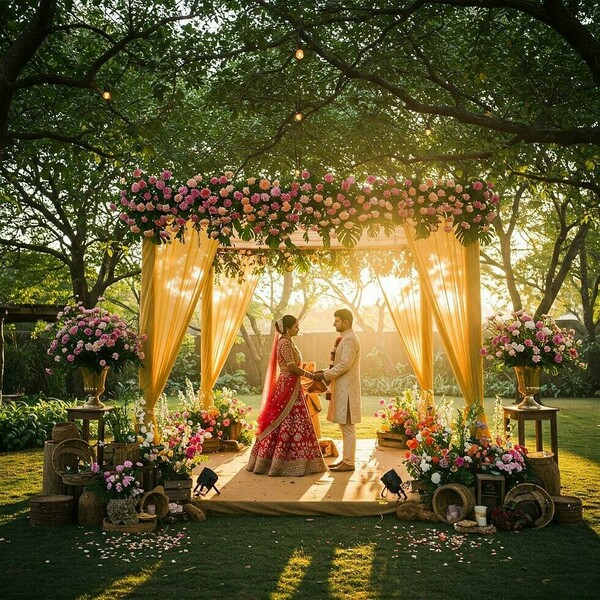
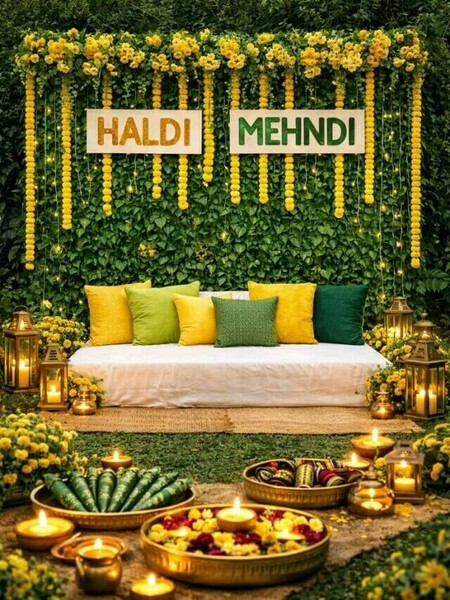
Marigold is the most beloved flower in South Asian weddings, and in 2027 it's getting a softer, creamier makeover. Think butter yellow rather than traffic-cone orange.
Where it shines: Haldi ceremonies, brunch mehndis, floral jewelry, and daytime décor.
Pair it with: Sage green, ivory, and antique gold.
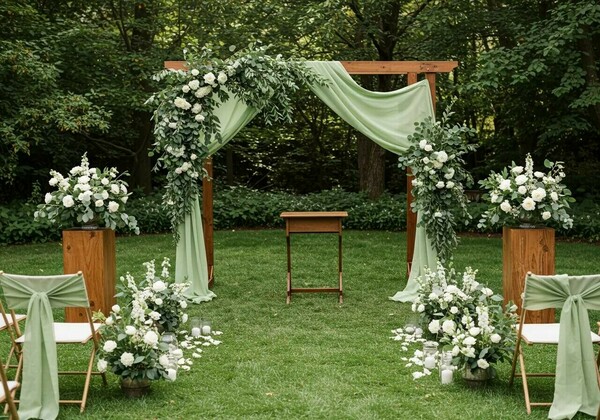
2. Sage Garden
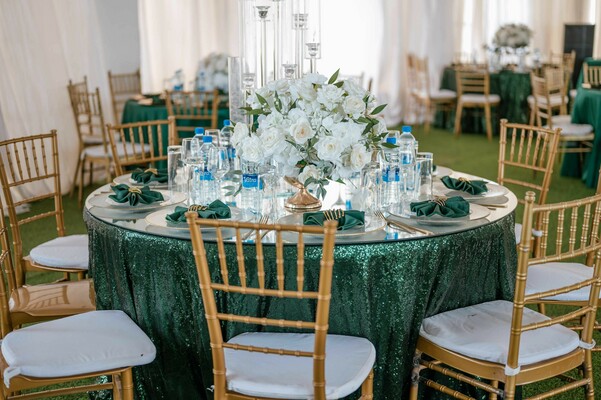
A dusty, herbal green is replacing the bright emerald of past seasons. It's calming, and it makes every flower look fresher.
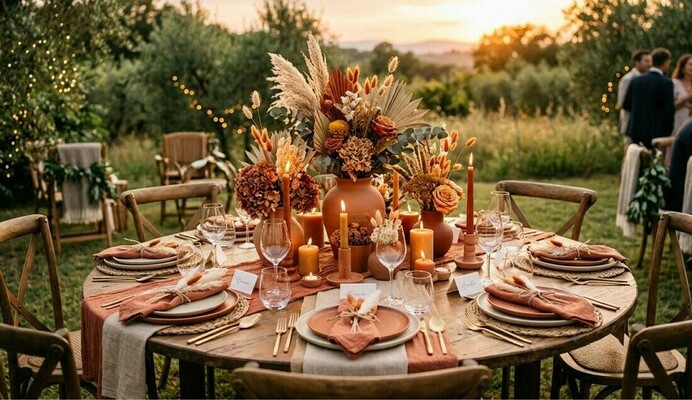
Where it shines: Tablescapes, welcome signage, bridesmaid and groomsmen looks, and mehndi lounges.
Pair it with: Terracotta rose, marigold butter, and champagne.
3. Terracotta Rose
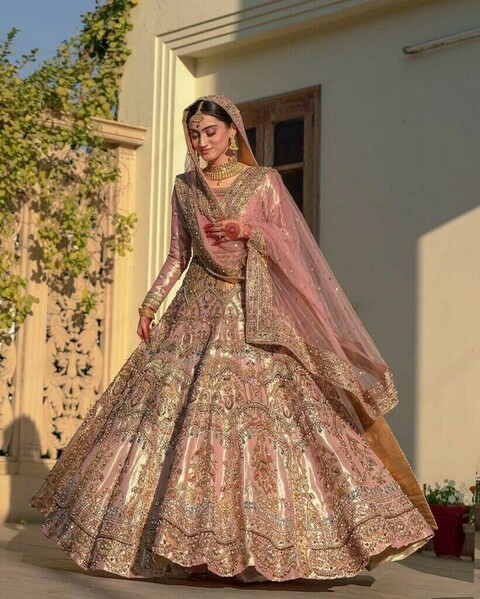
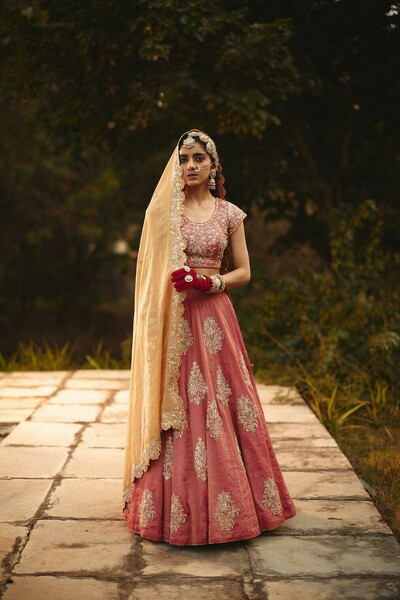
Part clay, part blush, and completely flattering. Terracotta rose has an earthy warmth that feels both traditional and current. It's especially stunning at golden hour.
Where it shines: Bridal lehengas, sangeet décor, and outdoor ceremonies.
Pair it with: Sage, ivory, and copper.
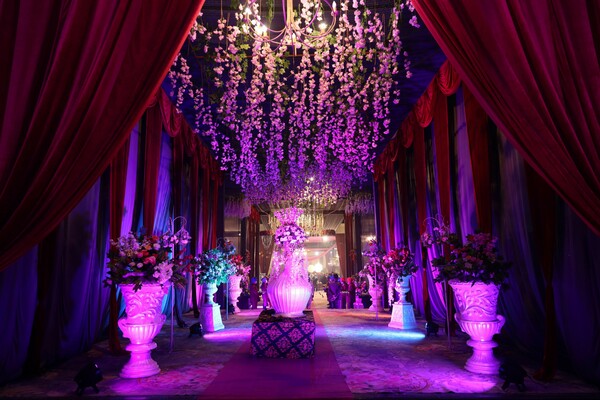
4. Mulberry Dusk
Deep berry tones bring instant drama. Mulberry is the shade for couples who want their evening functions to feel cinematic.
Where it shines: Sangeet nights, reception gowns and lehengas, candlelit tables, and velvet accents.
Pair it with: Champagne, gold, and blush.
5. Peacock Teal
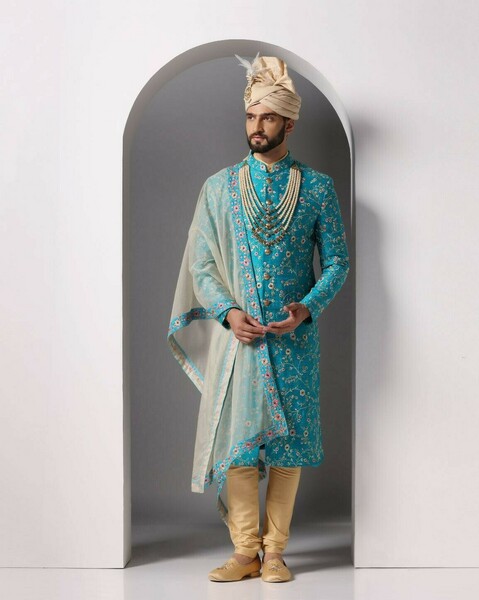
Peacock teal is the statement color of the season. Regal and jewel-like, it nods to heritage while feeling completely modern.
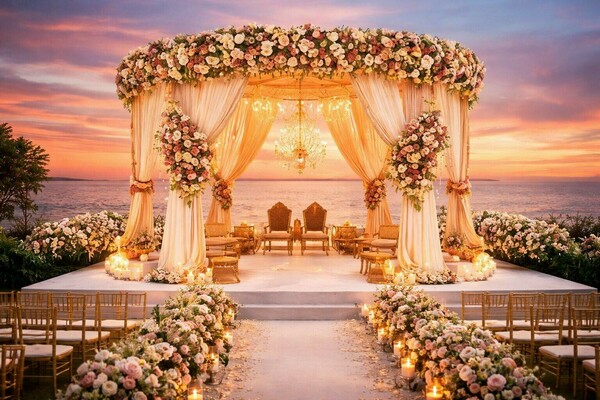
Where it shines: Mandap drapery, groom's sherwanis, bridal dupattas, and stage backdrops.
Pair it with: Marigold butter, gold, and mulberry.
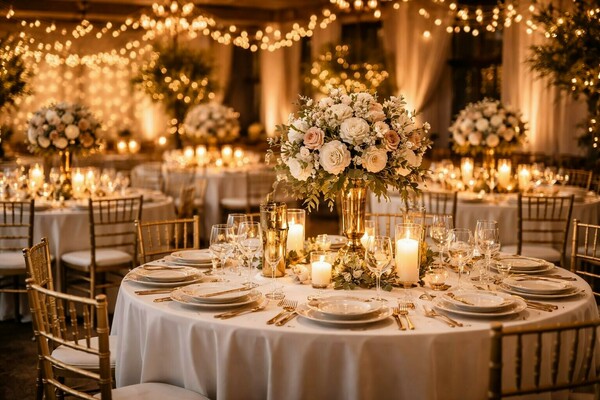
6. Champagne Ivory
Not every couple wants a riot of color, and that's perfectly valid. Tonal, glowing neutrals let texture, flowers, and light do the talking.
Where it shines: Ceremonies, reception décor, wedding cakes, and cocktail hours.
Pair it with: Any of the shades above as an accent.
How to Build Your Palette
You don't need to use all six. A simple formula works well:
- Choose one hero color. This is the shade guests will remember.
- Add two supporting shades. These give depth without competing.
- Finish with a metallic. Gold, brass, or copper ties everything together.
- Give each function its own mood. Your haldi, sangeet, and reception don't need identical palettes. Shift the intensity while keeping one thread constant.
A Note on Tradition
Trending colors don't replace the meaning behind the ones you grew up with. Red and gold remain timeless for good reason. The 2027 forecast is about layering new tones alongside tradition. Try a sage-and-marigold mehndi, or a teal mandap paired with a classic red lehenga. That's where the most memorable weddings come from.
Let Your Venue Set the Palette
The best color story works with the space around it. Stone, greenery, water, and natural light all change how a shade reads. Before you commit to a palette, find the venue that complements it.
Need vendors to bring the palette to life? Explore our Platinum Guide for trusted decorators, florists, photographers, and designers.


No comments yet.
Please, sign in to leave a comment.